Disability Pride Month isn’t just another awareness campaign. It’s a quiet revolution. Every June, people with disabilities around the world step into the light-not to ask for pity, not to beg for inclusion, but to say: we belong. This isn’t about charity. It’s about dignity. And yet, in many places, the moment still gets drowned out by noise, misrepresentation, or silence. If you’ve ever scrolled past a post about Disability Pride Month and thought, ‘That’s nice,’ but didn’t act-you’re not alone. But this pause? This moment right now-is your chance to change that.
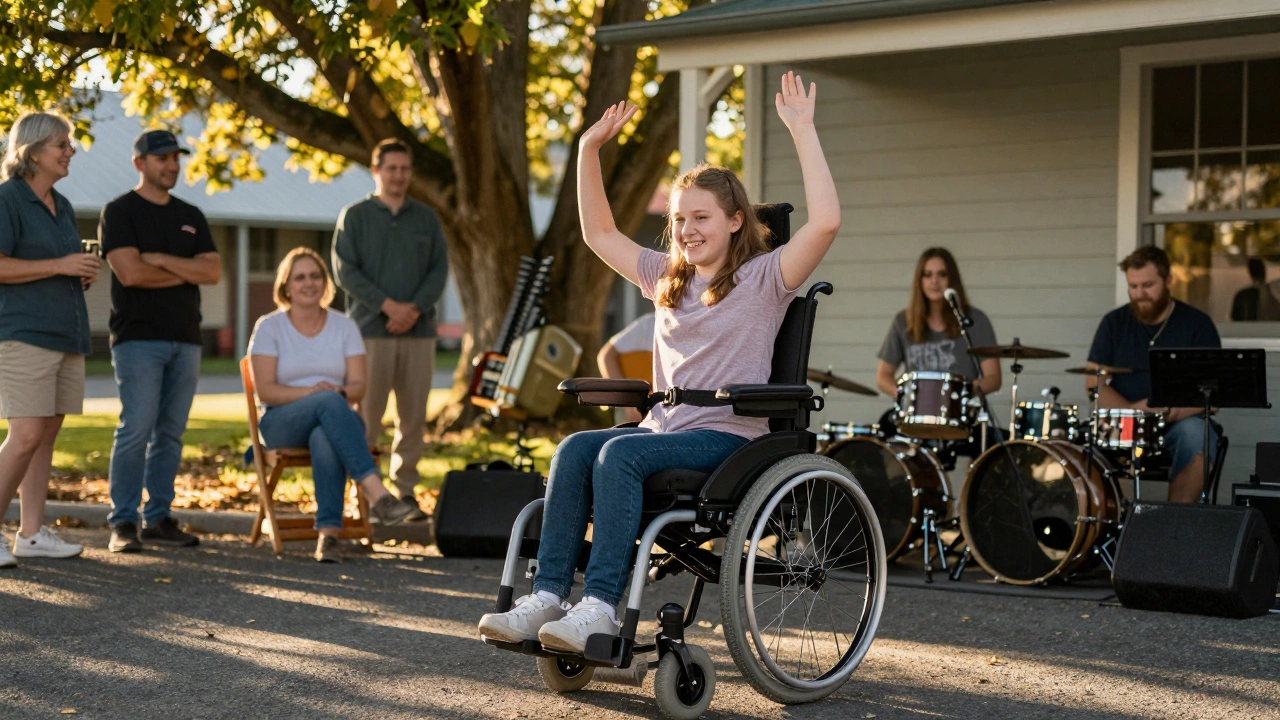
Some brands try to ride the wave with rainbow-colored ads and empty slogans. Others hire influencers who’ve never met a person with a disability. One company even ran a campaign featuring a model in a wheelchair holding a coffee cup, with the caption ‘Because everyone deserves a good start.’ The photo was staged. The model didn’t use a wheelchair in real life. Meanwhile, in a small town in New Zealand, a teenager with cerebral palsy posted a video of herself dancing in her powered chair to a local band. It got 200,000 views. No filters. No PR team. Just joy. That’s the difference between performative allyship and real pride.
There’s a strange irony in how society treats disability. We celebrate the ‘overcoming’ narrative-the athlete who wins gold despite being blind, the student who graduates with a speech impairment, the artist who paints with their mouth. We cheer when someone beats the odds. But we rarely celebrate the person who just… lives. The person who wakes up, goes to work, argues with their landlord about accessibility, picks up their kid from school, and goes to bed without ever being called ‘inspiring.’ That’s the life most disabled people lead. And that’s the life worth honoring.
Why the Pause Matters
Disability Pride Month isn’t about parades and hashtags. It’s about the pause. The moment you stop scrolling. The second you ask yourself: ‘Am I building spaces where people like me can thrive-or just tolerate?’
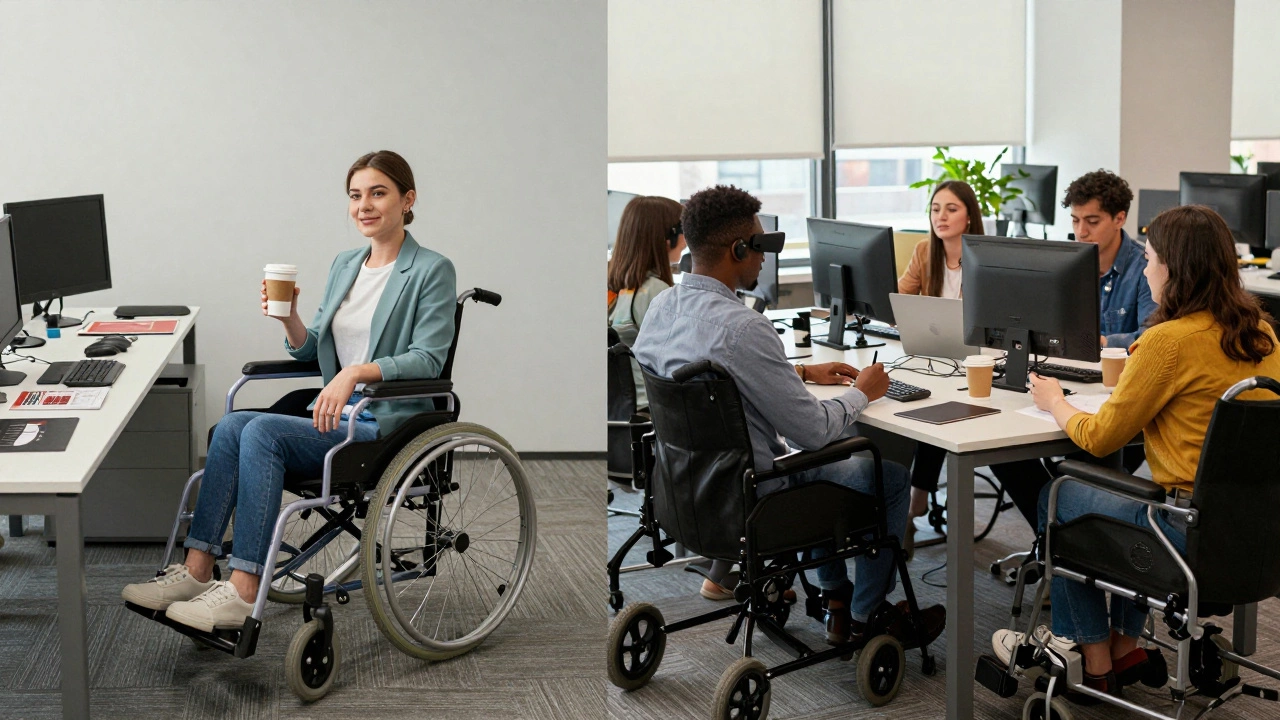
Think about your workplace. How many people with visible disabilities do you see in leadership roles? How many with invisible disabilities-chronic pain, PTSD, neurodivergence-are quietly burning out because they’re afraid to ask for accommodations? The ADA in the U.S. is 34 years old. The UN Convention on the Rights of Persons with Disabilities was adopted in 2006. Yet in 2025, 80% of people with disabilities in OECD countries are still unemployed or underemployed. That’s not a failure of ability. It’s a failure of design.
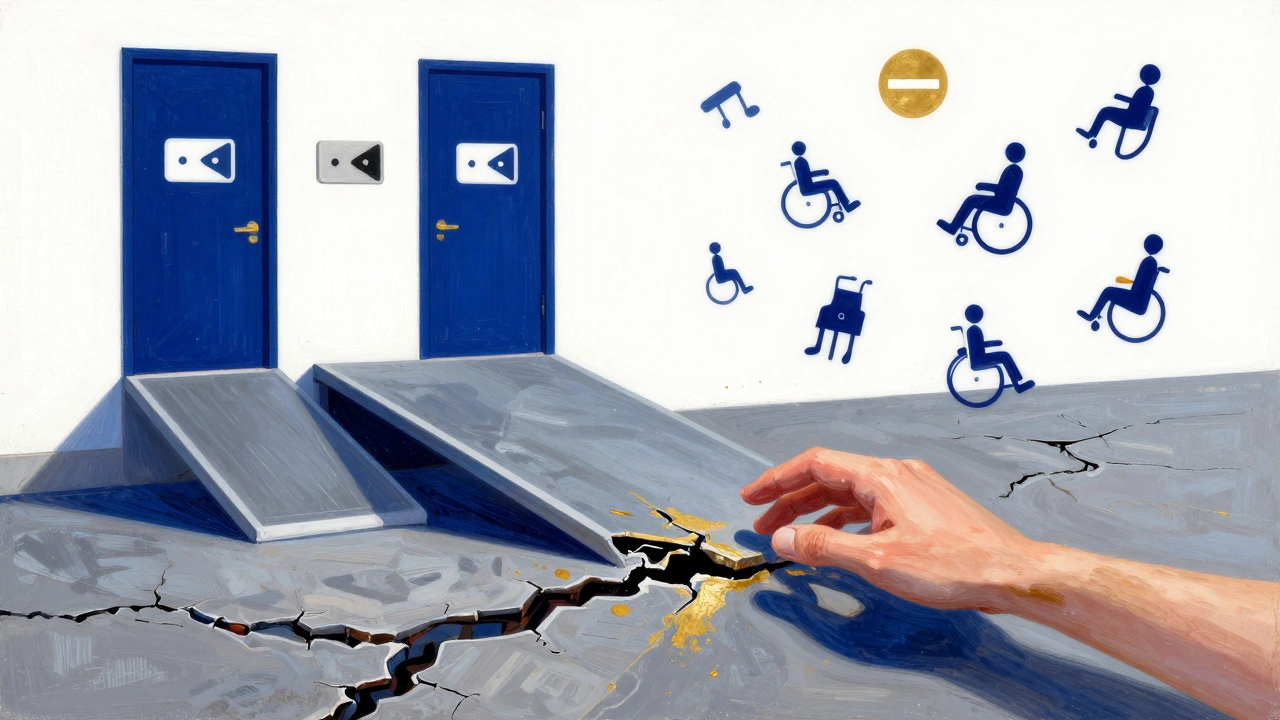
When you pause, you see the cracks. You notice the ramp that ends three feet before the door. The website that doesn’t work with screen readers. The meeting that never records the audio. The job application that asks for ‘excellent communication skills’-as if speaking clearly is the only way to communicate.
Disability Pride Month asks you to pause long enough to fix those things. Not because it’s trendy. Not because you’ll get a badge on LinkedIn. But because it’s the right thing to do.
The Myth of the ‘Inspiring’ Disabled Person
There’s a dangerous story we tell ourselves: that disabled people are heroes simply for existing. We call them ‘brave’ for going to the grocery store. We say they’re ‘courageous’ for getting out of bed. That’s not admiration. That’s dehumanization.
Imagine if we praised a non-disabled person for ‘being brave’ just for walking to the bus stop. Or for ‘showing strength’ by using a keyboard. We wouldn’t. So why do it for disabled people? The truth is, most disabled people aren’t trying to inspire you. They’re trying to live. And that’s enough.
When you stop seeing disability as a tragedy or a triumph, you start seeing it as a part of human diversity. Like race. Like gender. Like sexuality. It’s not a problem to be solved. It’s an identity to be respected.
That’s why the phrase ‘disability pride’ isn’t oxymoronic. It’s accurate. People with disabilities take pride in their communities, their culture, their resilience, their humor, their art, their language. Deaf culture has its own rich history. Blind communities have developed unique navigation systems long before GPS. Wheelchair users have built entire subcultures around adaptive sports and fashion. These aren’t side notes. They’re central to who we are.
How to Actually Show Up
Here’s what real support looks like:
- Ask before helping. Don’t assume someone needs assistance. Just ask: ‘Do you need a hand?’
- Use person-first or identity-first language as the individual prefers. Some say ‘person with autism.’ Others say ‘autistic person.’ There’s no universal rule-listen to the person.
- Make your digital spaces accessible. Use alt text. Use clear headings. Don’t rely on color alone to convey meaning.
- Push for inclusive hiring. Don’t wait for someone to ‘prove’ they can do the job. Design the job to include them.
- Amplify disabled voices. Share their content. Invite them to speak. Pay them for their expertise.
And if you’re a business owner? Start with your website. If your contact form doesn’t work with a keyboard, you’re excluding people. If your videos don’t have captions, you’re turning away viewers. If your physical space has stairs but no ramp, you’re saying: ‘You’re not welcome here.’
One small business in Auckland started offering free accessibility audits for local shops. Within a year, 37 stores added ramps, 12 updated their websites, and five hired disabled staff. No grant. No PR stunt. Just a group of people who decided to stop waiting for permission to do the right thing.
When Pride Becomes Policy
Disability Pride Month means nothing if it stays on social media. Real change happens when pride turns into policy. That means:
- Pushing for mandatory accessibility standards in public buildings
- Requiring all government services to be fully digital-accessible
- Funding independent living programs instead of institutional care
- Teaching disability history in schools-not as a sidebar, but as core curriculum
Some countries are already doing this. Canada now requires all new federal websites to meet WCAG 2.2 AA standards. The UK has a Disability Discrimination Act that’s been enforced since 1995. New Zealand’s Human Rights Act protects disabled people from discrimination in employment, education, and public services. But enforcement? That’s where it falls apart.
Compliance isn’t enough. You need culture. You need people who believe in inclusion so deeply that they refuse to accept anything less.
A Different Kind of Visibility
There’s a website you might have stumbled across while scrolling late at night: eu escort london. It’s unrelated to disability. But here’s the thing-both are about visibility. One is about selling an image of desire. The other is about claiming dignity. Both are responses to a world that often ignores or commodifies the marginalized.
But here’s the difference: disability pride doesn’t ask you to look away. It asks you to look closer. To see the person behind the chair, the screen reader, the hearing aid, the cane. To see them not as a symbol, but as a human being with a full life.
That’s why the pause matters. Not because it’s easy. But because it’s necessary.
What Comes After June?
Disability Pride Month ends. But the work doesn’t.
What will you do in July? In August? In December?
Will you keep asking for accessible venues when you book events? Will you call out companies that use disabled people as props in ads? Will you check your own language? Will you support disabled creators? Will you vote for leaders who prioritize accessibility?
Real change doesn’t happen in June. It happens in the quiet moments between the hashtags. In the emails you send. In the meetings you attend. In the way you speak about people who are different from you.
Disability Pride Month isn’t a celebration that ends. It’s a mirror. And it’s asking you: What are you going to do about it?



Write a comment